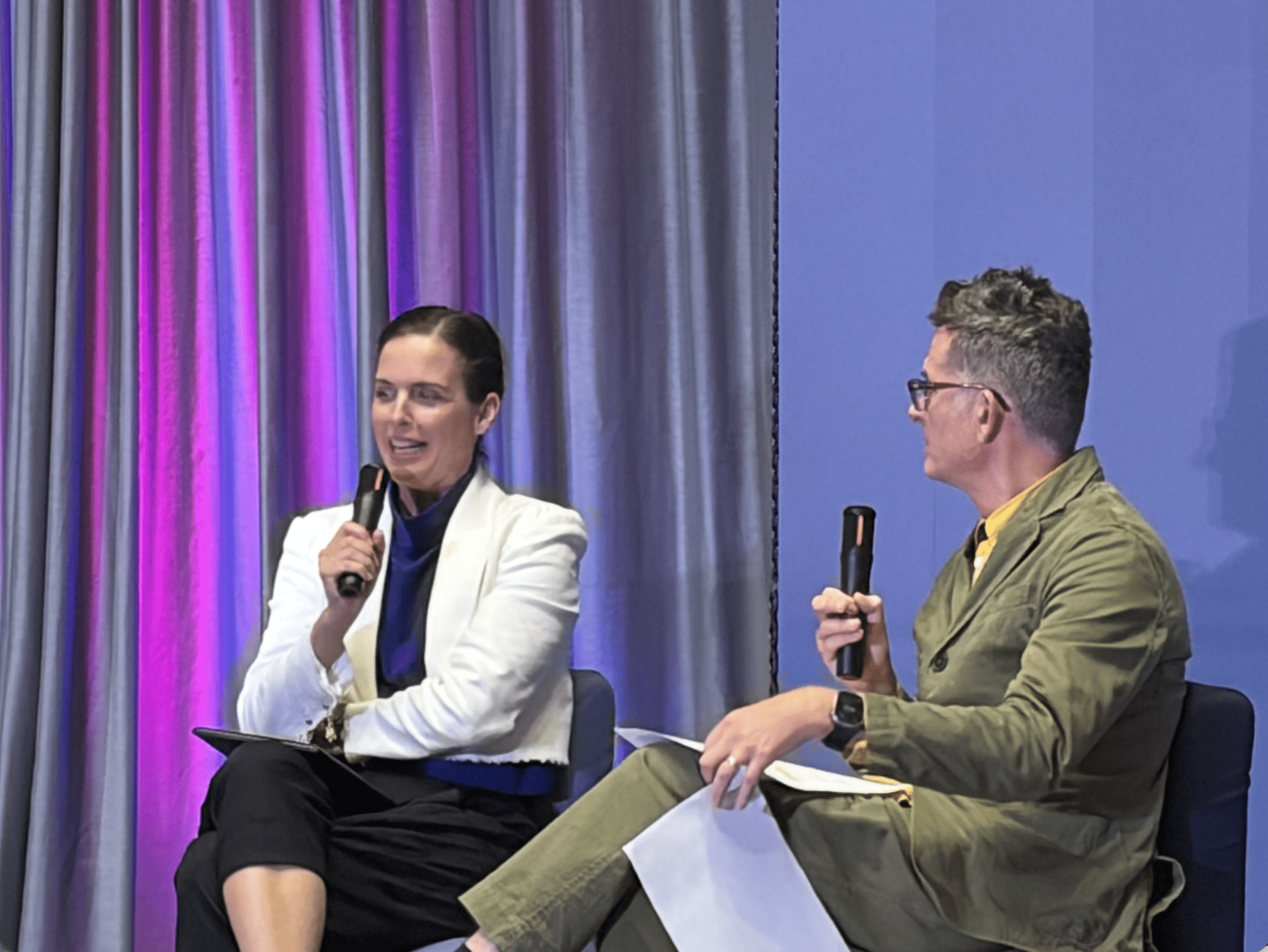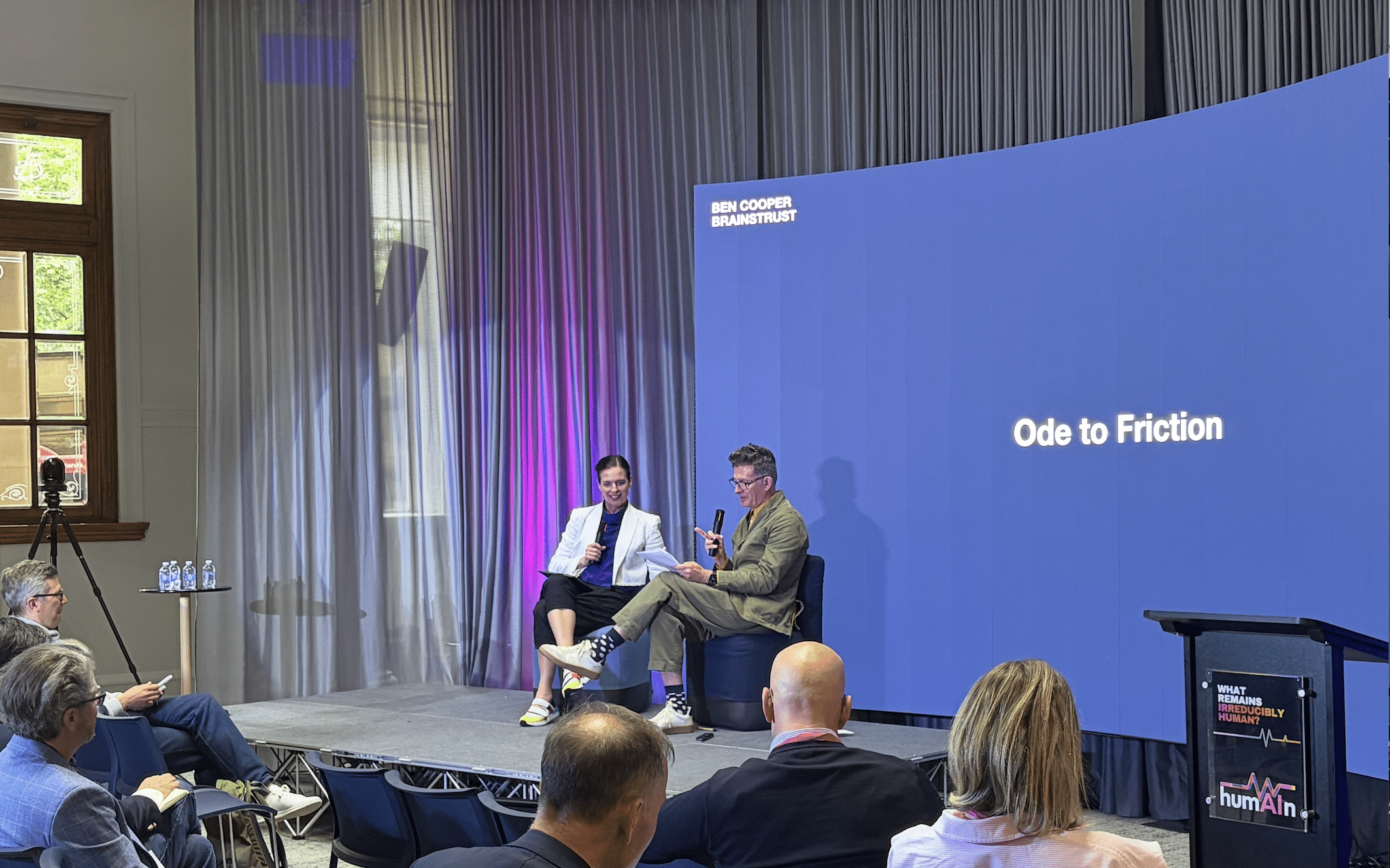
Lucinda Barlow’s team gets smaller every year. So does her budget. Yet her priorities keep growing, and she says the same is true for every CMO.
Speaking at the humAIn conference in Sydney, days after Uber Eats and Special Australia took the Grand Effie at the Australian Effie Awards, Uber’s head of international marketing said that pressure pushes teams towards systems thinking and AI-fuelled efficiency. They find what works, then codify it, scale it and automate it.
It’s a mindset borrowed from tech. “When you work in technology, you hear the language that becomes culture,” she said. “Fast is better than slow. Frictionless, effortless, seamless. Fail fast. This language becomes the discipline of business, and it becomes this truth.”
The risk, she said, is that creativity drains away. Push too far down that road and panic sets in, bringing “an irrational desire for rationality”.
Efficiency alone isn’t the goal, Barlow warned. Mastery is. And mastery needs creativity, experimentation and the very thing efficiency eliminates: friction.
It’s an unlikely message from the marketing boss of a company built on making things easier. “Friction is the thing that will keep your creativity alive,” she said. “It will make sure you are not quickly diverging to stagnation, and ultimately it will help you build your mastery [of the craft].”
When success becomes a system
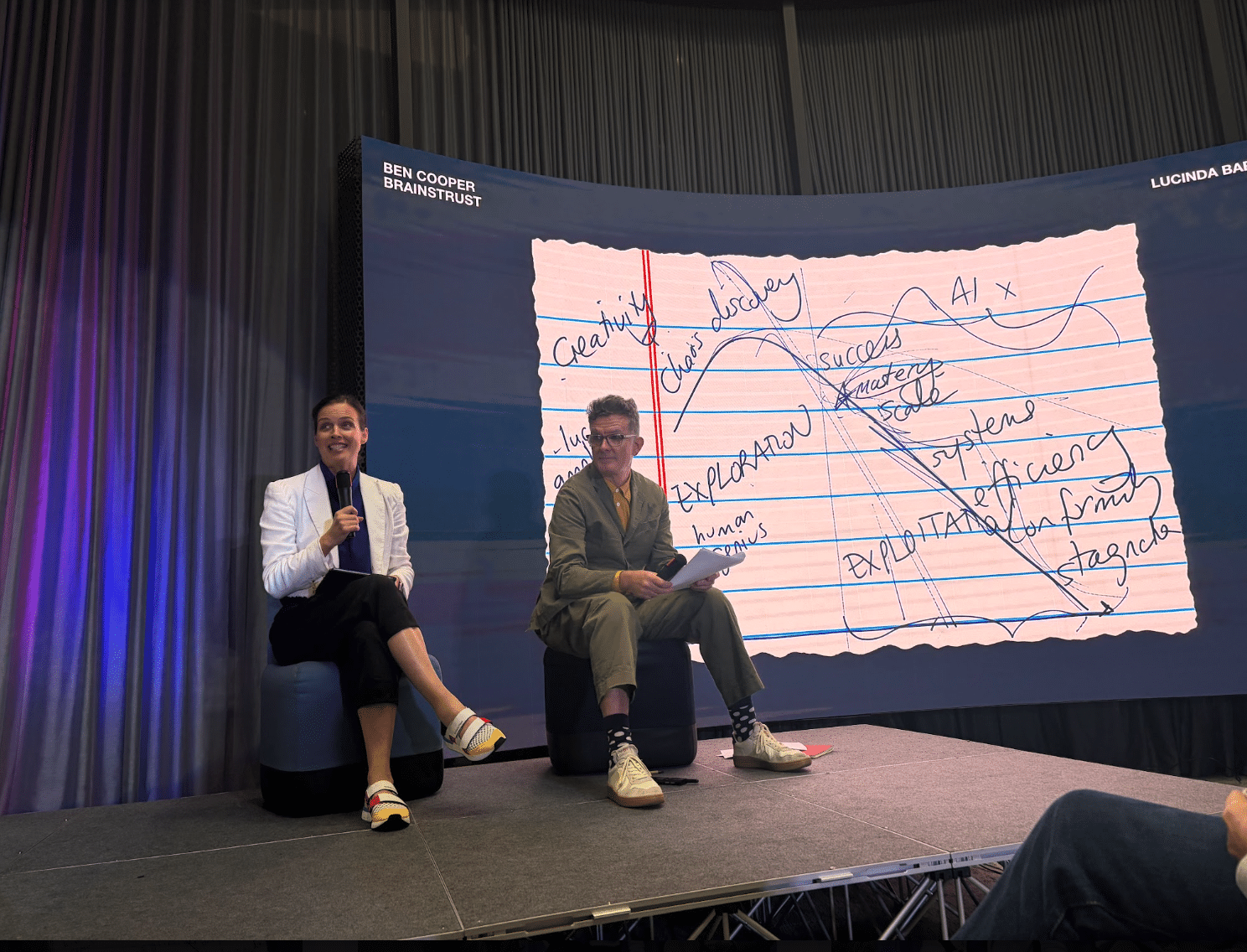
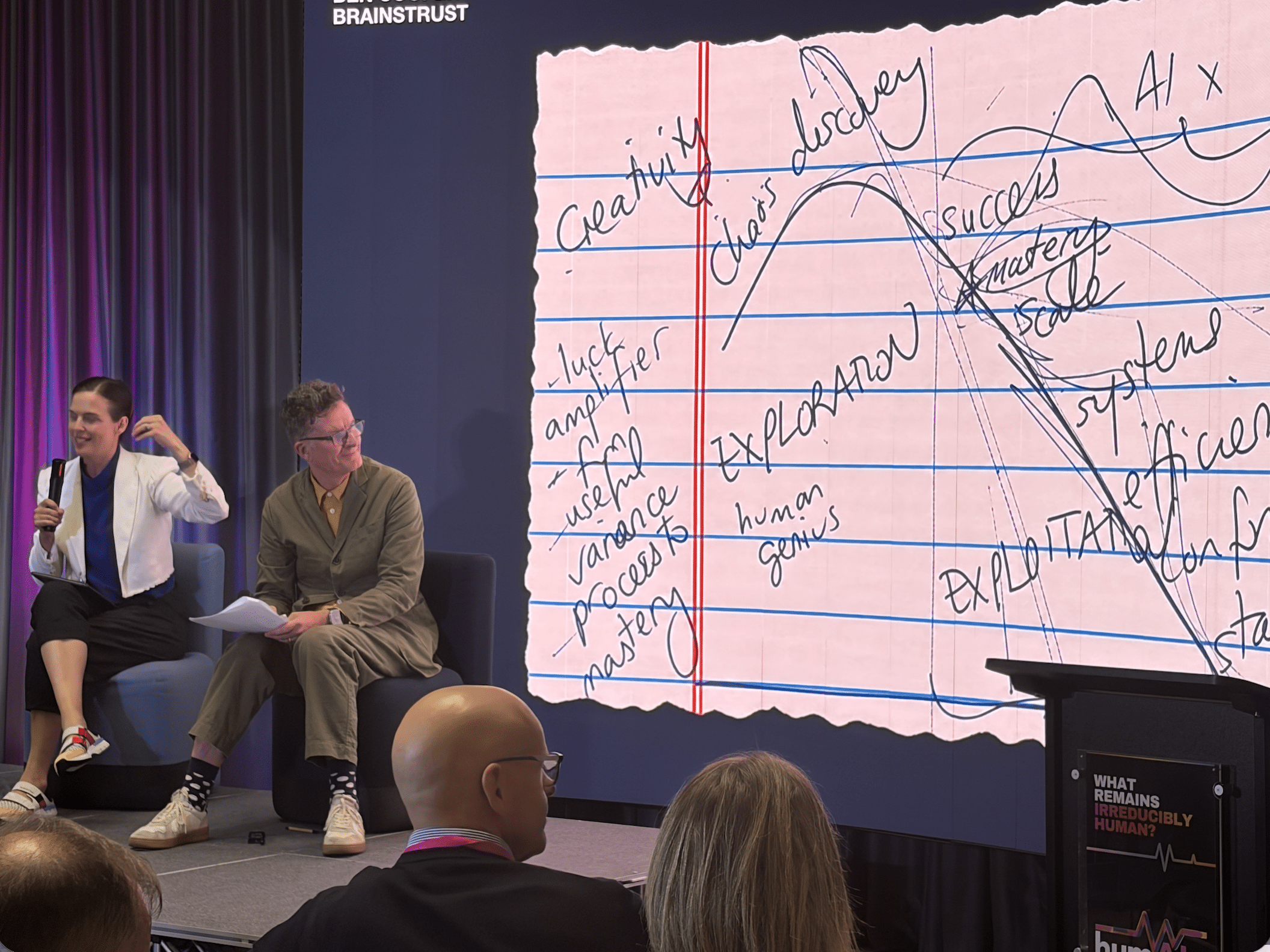
Barlow had no slides for her humAIn presentation, just a poem and hand-drawn sketch of a curve demonstrating that creativity peaks early when teams are exploring. Success leads to scale and systems, then efficiency, but this can also spiral to conformity and inertia.
Systems thinking, “the talk of the week” at Cannes, has its place, she said, but it comes at a price if this is your end goal. “The very moment you do it, there is a trade-off on your creativity. You feel it instantly.”
AI shortens the curve. “AI accelerates the force in both directions,” she said. It speeds up creative exploration, but it also tempts teams to mistake cheap ideas for success.
Her fix is friction on purpose, especially when things are going well. She pointed to Uber CEO Dara Khosrowshahi’s view that peacetime — when things are going well — is when leaders need to “tighten the reins”, seek “smart risk-taking” and go looking for the next big problem to explore and solve.
Play, bin, go deep, bank time
Uber’s marketing team set four principles for AI two years ago and still use them. They start from one rule: time and dollars saved are not success, and neither is a high volume of ideas. “That is not growth,” Barlow said.
Play: trial every tool, however inefficient. “I said to my team and my creative partners, I want you to make me nervous with AI. I want to see where it breaks.”
Bin: keep the bar high. “Good enough is not good enough. Mediocrity is misery.”
Go deep: guard human judgment, even from creative testing, which Uber uses heavily. “As soon as you do it, you delegate a little bit of your human judgment,” she said. Teams start forming rules like “vignettes don’t work”, and those patterns need to be broken.
Bank time: use the time AI saves for reflection in service of mastery, not more output. “When we only attend to what is measurable, what is on the screen, what is in the machine, we become more like it.”
Good friction, bad friction
Not all friction is worth keeping, Barlow said. Admin, bureaucracy and excess process should go. The differences between how her Brazilian, Japanese and French teams tackle a problem should stay. “That is beautiful friction.”
Asked how this fits with Uber’s own product, which is based on a seamless food delivery model, she called it “a wonderful tension”. “Ease is fantastic,” she said. “But that is not to say the product experience needs to translate to frictionlessness in everything you do inside a company.”
With budgets shrinking, her priority is protecting creativity-led growth, and making heroes of the business leaders who “put their P&L on the line” to invest for the long-term without a guarantee it will work.
“That’s what we’re here for,” she said. “Because if it was too easy, everyone would be able to do it.”