AWARD Chair Mandie van der Merwe has called on the industry to take personal responsibility for developing junior talent, warning that AI is removing the hands-on experience through which generations of creatives have learnt their craft.
“Everyone that’s sitting here can train somebody, so please do,” van der Merwe told delegates at Sydney’s humAIn conference last week.
The Saatchi & Saatchi Chief Creative Officer was speaking on a panel examining how the advertising sector can develop its next generation of creative talent as AI increasingly takes on entry-level work.
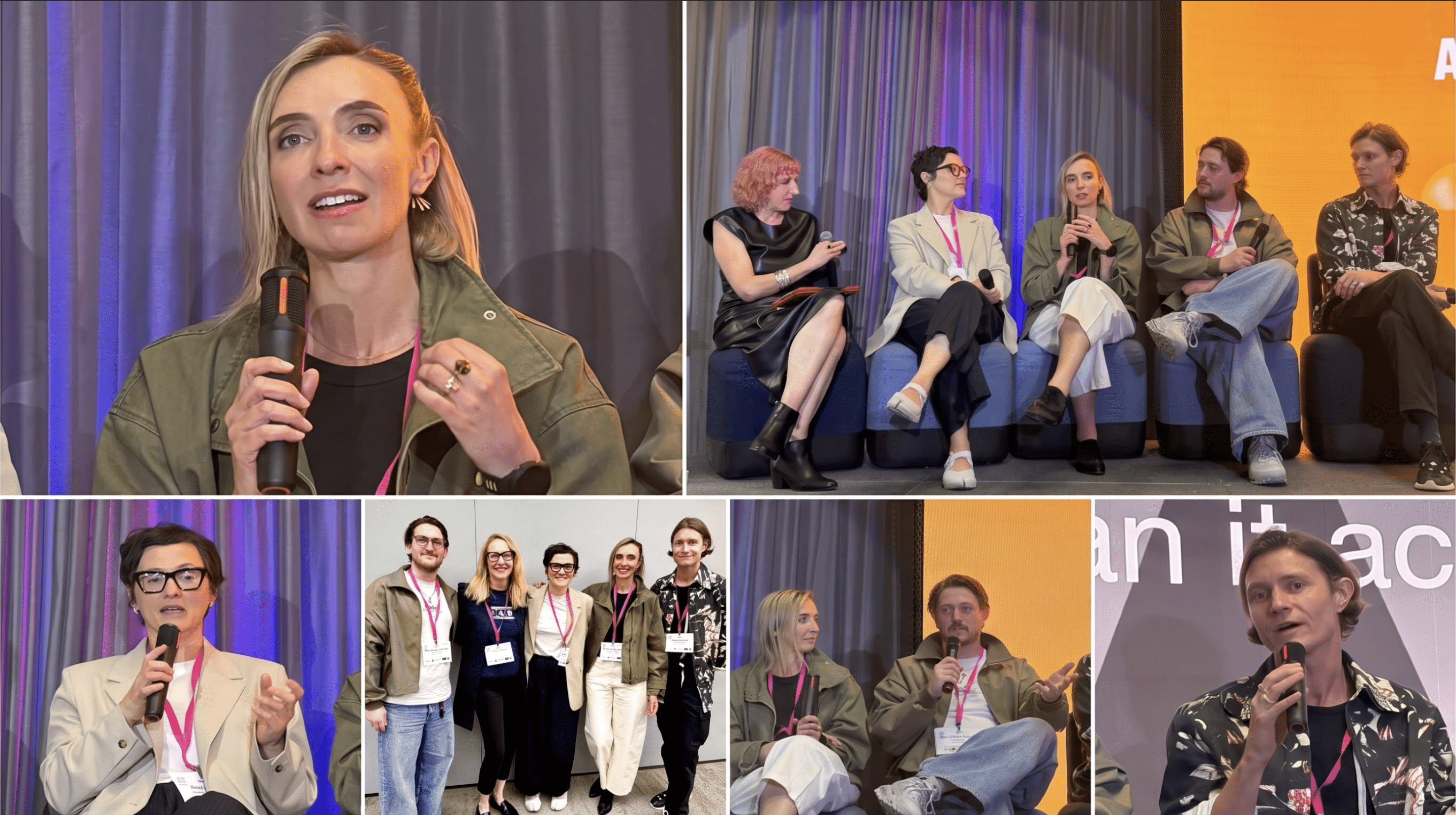
Hosted by humAIn founder Cat McGinn, the session – Bridging the Missing Rung: Nurturing Creative Talent When AI Joins the Team – brought together van der Merwe, Leo Australia Executive Creative Director Hilary Badger, Photoplay Executive Producer Ross Colebatch and We The People Creative Rhys Delios Callanan.
Van der Merwe said the responsibility for developing young talent could no longer be left to traditional agency training structures alone. Agencies, industry bodies, clients and technology platforms all had a role, but individual creative leaders needed to act.
“There’s not always a job at the end of a mentorship. But what I am doing is opening a door,” she said. “Whose responsibility is it? It’s all of our responsibility.”
Waiting for a single solution, she warned, risked leaving the industry “feeling quite hopeless in the face of what is massive, massive change and disruption”.
At the heart of the problem is the potential loss of the trial-and-error process that builds creative judgement.
“You don’t know what a brilliant copy line is until you’ve written 100 bad ones,” van der Merwe said.
“AI is very good at giving us an output. But it doesn’t necessarily challenge you unless you’re asking it to challenge you. Those moments of questioning are how you learn.”
Traditionally, creatives developed that judgement by making work, having it challenged and refining it alongside clients, producers, photographers and editors.
Colebatch said the same apprenticeship model was under pressure in production, where photographers traditionally learnt their craft by assisting more experienced practitioners.
That experience taught everything from lighting and client communication to the practical realities of working on set.
“If you don’t have that experience, it becomes really difficult,” he said.
The impact was already being felt in ecommerce photography, he added, as AI reduced the need for large-scale product shoots that once provided opportunities for emerging talent.
For Badger, the response must also involve changing the culture inside creative departments.
“Creative departments haven’t traditionally been known for being places that are safe to fail. However, I think that’s really the role of creative leadership,” she said.
AI’s rapid adoption had created “an almost obsessive focus on output”, she argued, when much of creativity’s value should come from the human judgement developed through experimentation and failure.
“AI makes everything look so perfect. But we’re not perfect. Part of the skill of being creatively excellent is vulnerability. So, we have to model that.”
While the industry’s old “sink or swim” culture had largely receded, Badger said creative leaders needed to provide more support as junior roles evolved.
“We need to protect people and make people feel safe in changing times.”
The panel also pointed to AWARD’s inaugural GenAI Sprint as an example of combining AI experimentation with human mentoring.
Badger, who mentored teams during the 60-hour creative challenge, said the competition had been deliberately structured around human interaction, with checkpoints and opportunities for participants to question their thinking.
Delios Callanan, whose team won, said emerging creatives could distinguish themselves by showing initiative and a willingness to experiment.
“Being not afraid to go into the tools and find a way to make something work, or even give it a shot and say, ‘Hey, I made this using this. I’ve never done this before,’ is already impressive,” he said. “It shows ambition.”
But when the panel was asked what AI would never replace, the answers returned to the qualities that had defined the discussion.
“Ideas,” said Badger.
“Joy,” said van der Merwe. “The joy of connecting with people, the joy of an idea, the joy of making that lateral leap.”