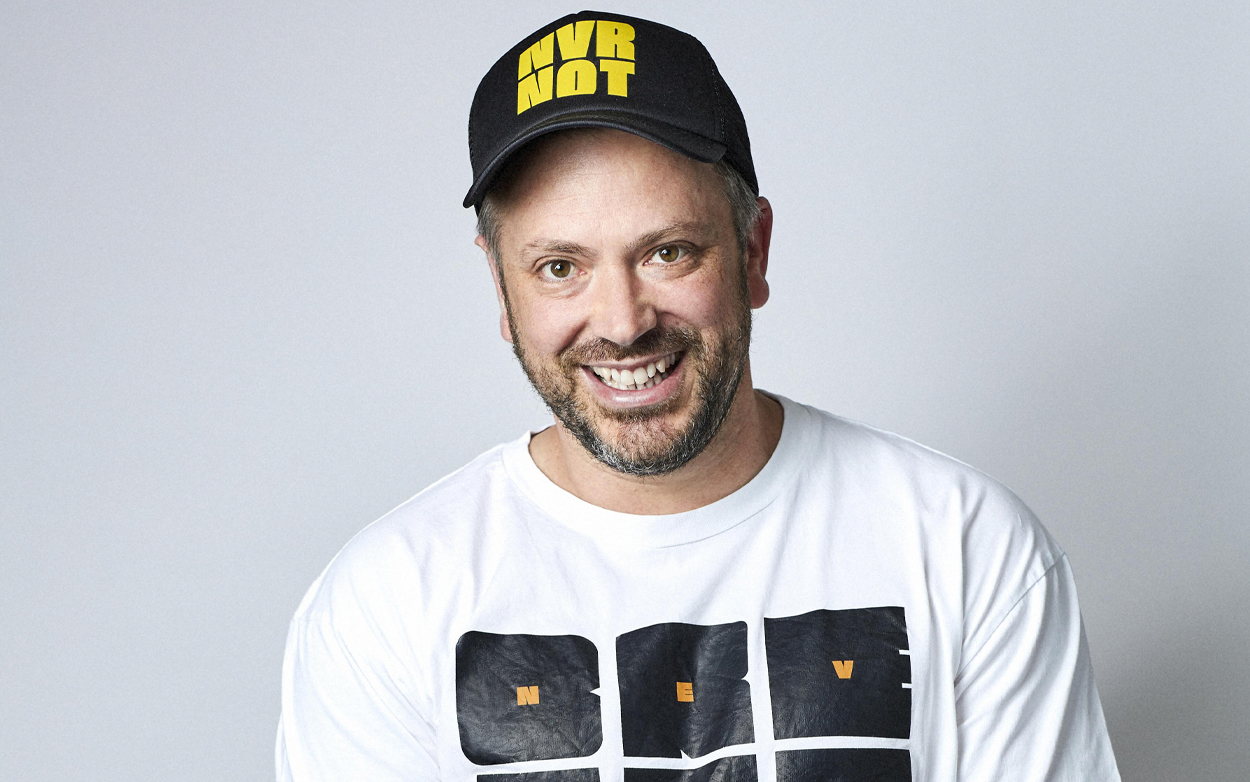
By Andy Wright, Founder, Never Not Creative
Since 2018, I’ve been asking our industry to stand on the scales, take the temperature, pause and reflect.
“Life moves pretty fast. If you don’t stop and look around once in a while, you could miss it.” That was Ferris Bueller, which shows my age.
The point I’m getting at is that we spend so much time keeping up that we put ourselves second and everything and everyone else first.
Some may argue that the mental health conversation is getting stale. I’ve heard some say, “Are we still talking about this?” or “Do we have to?” Unfortunately, all the signs across four previous research waves are yes. But can we mix it up? Yes. Does the minute a conversation turns to mental health have to result in a discussion about negativity, about doom and gloom, about having to compromise everything? No. We do have to recognise and empathise with the challenges. But equally, we have to shine light on the positives. This latest research wave is an opportunity to highlight the conditions that align with healthy, thriving people, doing their best work, feeling supported, championed and ready and willing for what’s next.
This latest wave isn’t about cataloguing misery. It’s about recognising that helping people thrive at work isn’t necessarily about having a mental health conversation. It’s about treating them like humans. The signs were there in previous waves. When a business was seen to genuinely put its people first, signs of moderate to severe anxiety and depression roughly halved. If we give them clarity on what’s expected of them, and guidance on how to get ahead, they’ll feel a sense of achievement. You likely won’t even need to say those words beginning with M and H.
One of the questions we ask this wave is whether you’ve had enough of the mental health conversation entirely. You can say yes. Anonymously, without judgement, and your answer becomes part of the true picture instead of an eye-roll, sigh and grumble into your coffee.
It’s one of four things we’re asking that I don’t believe anyone else is asking right now. Does loving the work protect us, or does it hurt more when work we’re proud of gets killed, changed beyond recognition or quietly shelved? Is AI making us anxious, and who exactly is applying the pressure to use it? And do leaders really know how their people are doing? This time, leaders and their teams answer mirror-image questions. For the first time we’ll see the gap between what leaders think they see and what their people actually show them.
We can ask all of this because we’ve been here before. Five waves since 2018, carrying the same validated clinical measures every time. One survey tells you where you are. Five tell you where you’re going. Last wave, more than 2,000 of you answered. We learned that 70% had experienced burnout in the previous year, and that signs of anxiety ran at around two and a half times the general population. But we also learned what helps. People with real flexibility, the kind where you choose where and how you work rather than having it mandated, showed the lowest signs of anxiety and depression of any working arrangement. And when we asked what would most improve mental health at work, the top answer wasn’t an app or a perk. It was empathetic, educated leaders, with 69% calling it absolutely essential. Yoga finished near the bottom of the list, keeping the motivational posters company.
The levers live in how work is designed and led, which means every one of us can actually pull on them.
So, the ask. Thirty minutes. I won’t pretend that’s nothing. You’re busy, but I’m asking anyway, because we only do this once every two years and your answer shapes how our industry understands itself. It’s shorter than last time. It’s anonymous, independently reviewed and built on validated clinical measures, and it’s run by a charity. Everything gets published openly. You give us 30 minutes, you get the findings back.
If you lead a team, take it, then send it to your people. If you feel fine and are wondering what all the fuss is about, take it, and share what works for you. Send it to a sceptic. Share it in your peer and friend groups. The larger the pool, the greater the opportunity to pull out insight that can help us all.
***
Complete the survey by November 20 at https://www.surveymonkey.com/r/mh26-aca