
How do you reach an audience that believes they’re invincible? Bastion and Cancer Institute NSW faced one of public health’s toughest comms challenges: getting young Australians to see vaping as a genuine health risk when all they could see were the benefits, not the risks. Every Vape is a Hit to Your Health, a Bronze Effie-winning campaign that drove real behaviour change, motivated 24,000 young people to attempt to quit, and a further 15,000 to consider it. Bastion’s Angela Morris, National Chief Strategy Officer, and Addison Gazal, Group Strategy Director, outline how they used behavioural economics, empathy and evidence‑based creativity to change behaviour at scale.
What made this so difficult?
Angela: Optimism bias – or, in Australian terms, “she’ll be right.” It’s that belief that bad things happen to other people, not to me. Young audiences feel invincible, so scare tactics alone won’t land. We had to find a way to make the risks personal without sounding condescending or alarmist.
How did you tackle it?
Angela: The process was rigorous. Every Cancer Institute NSW campaign is grounded in behavioural science and mapped through proven behaviour change models. We start with deep formative research into attitudes, motivators and barriers, then test strategy, creative territories and execution relentlessly. With youth, especially, the culture changes fast, so we begin each phase as a clean slate, building on knowledge but looking for new insights, new validation, no assumptions.
Addison: That rigour takes time – often one to two years from initial research to launch. And it doesn’t stop once we’re in‑market; there’s constant optimisation. Each year we reassess behaviour shifts and refresh creative to keep the message credible and current.
What unlocked such a strong behavioural response?
Angela: The big insight was that young people weren’t chasing risk—they were chasing benefit. Social connection, stress relief, identity. Once we understood that, empathy became central to the strategy.
Addison: Timing also mattered. By 2023, people had begun suspecting vaping might be harmful, but lacked confirmation. Having the government, the authoritative voice, finally say “this damages your health”, gave the message legitimacy. It was the right message from the right source at the right moment.
How did the campaign evolve?
Angela: The first phase in 2021–22 was purely educational – dispelling the myth that vaping was just “flavoured air.” This second phase moved into true behaviour change, targeting current users. Their mindset had shifted from ignorance to suspicion, but optimism bias still ruled.
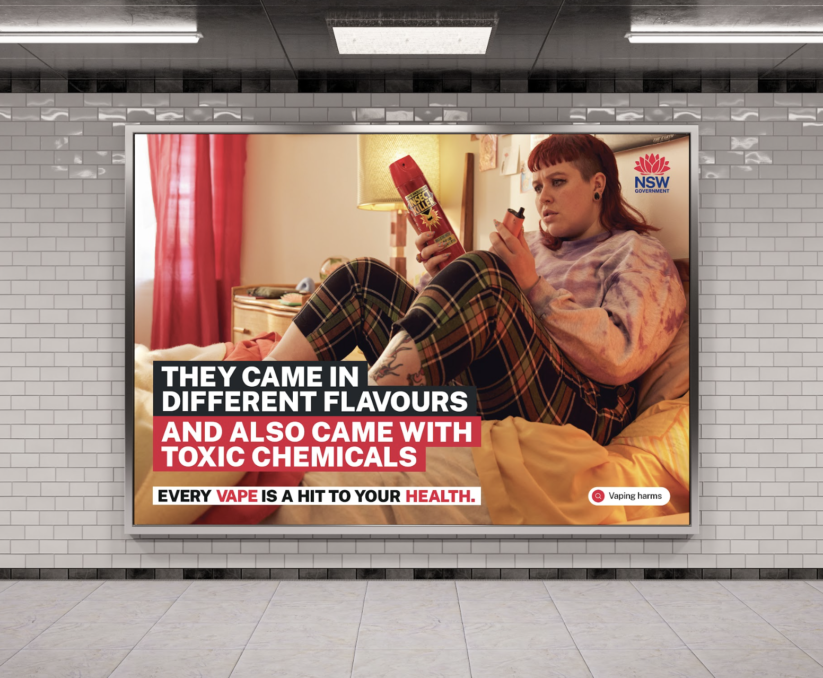
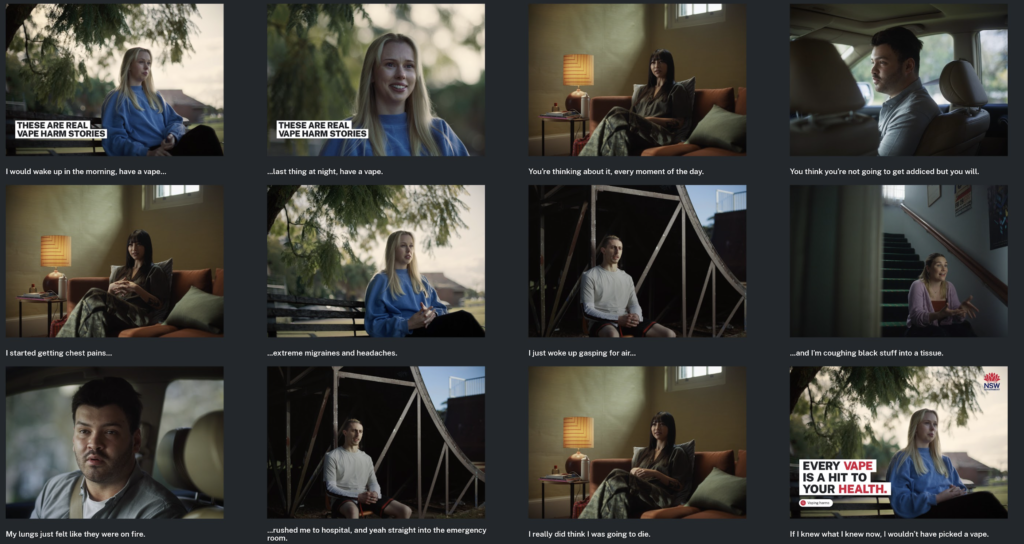
Our creative territory changed to the confirmation of harm. By showing evidence without shaming, we moved from awareness to reflection. Tone was critical: empathetic, not preachy.
You measured success through Social Return on Investment. Why is SROI so significant?
Addison: SROI quantifies the total societal value a campaign creates – for every dollar invested. It includes avoided healthcare costs, productivity gains, longevity, quality of life – the full social impact, not just dollars out versus in.
Traditional ROI asks, “How much revenue did this generate?” SROI asks, “What measurable good did this deliver for society?” For this campaign, the independent analysis found $8.20 in public value for every $1 invested.
Angela: That’s so important for government work. Every dollar spent must be justified by long‑term health, social and economic outcomes, not just by awareness metrics. SROI turns behavioural impact into a tangible value story.
What creative pivot helped young people actually listen?
Angela: Two things. First, recognising that our audience was now suspicious but dismissive, they wanted confirmation of harms, not speculation. That lets us speak with more certainty and authority.
Second, framing the message through empathy: acknowledging the perceived benefits before introducing evidence of harm. We didn’t tell them what to do; we let them complete the thought themselves.
In our hero executions, we validate the behaviour before challenging it: “We get why you do this”, paired with “Here’s what it actually does to you.” That balance made the message empathetic, yet also thought-provoking.
Addison: Even our call to action, “Search vaping harms,” reflects that tone. It’s an invitation, not an order. You’re empowering curiosity rather than confrontation, which is crucial with audiences allergic to being told what to do.
How did creators help it land?
Angela: That layer focused on normalising quitting and not vaping. It’s incredibly difficult to make abstaining feel aspirational, but authenticity was the key. We briefed creators to fold the message naturally into their usual content – things like how to say no when a friend offers a vape, or their own decision to stop buying them.
Addison: The most effective pieces used humour and self‑awareness. One creator joked, “Am I even a vaper if I never buy one and just borrow my friend’s?” and it resonated because it was real. Finding government‑approved influencers is hard, but that credibility made them powerful messengers, especially within First Nations and local youth communities.
What did the Effie win mean?
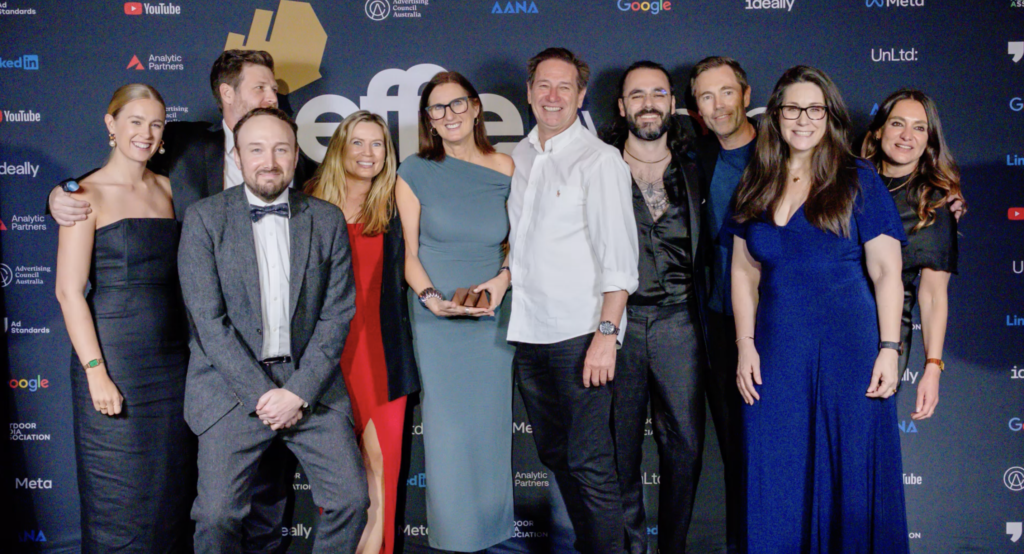
Angela: We believe in the power of creativity informed by strategy — that’s what builds a position of strength – and this was an important validation of that.
What’s your advice for marketers?
Angela: Hold public‑sector work to the same standard as commercial brands. Evidence, research, insight and measurement are your creative foundations.
Addison: Track real outcomes, not just impressions. And simplify ruthlessly. Behaviour change is complex; communication shouldn’t be.
Angela: Ultimately, clarity is courage. Creating simplicity out of complexity is the hardest thing to do, but it’s what makes a campaign truly effective.
***
Watch the full interview here.
If your work worked, make the case. Effie 2026 entries close June 1.
